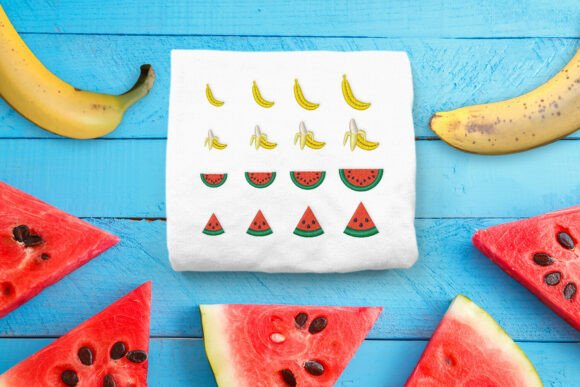
Banana Watermelon Micro Embroidery Set Review
As an embroidery designer who has spent years digitizing files for commercial clients, I approach every new machine embroidery design with a critical eye. It is not just about whether the image looks cute on a screen; it is about how that digital embroidery file translates to fabric, how it holds up in production, and whether it adds genuine value to a brand’s merchandise. Recently, I had the opportunity to review the Banana Watermelon Micro Embroidery Set, and I want to share my professional perspective on how this collection performs for small business owners, apparel decorators, and handmade brands.
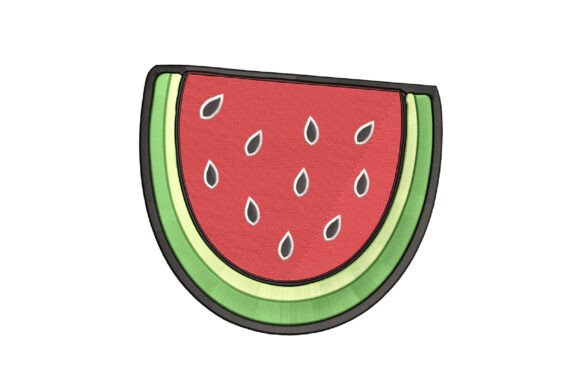
The first impression of the Banana Watermelon Micro Embroidery Set is one of playful professionalism. The set includes four distinct fruit mini embroidery designs: a peeled banana, a whole banana, a half watermelon, and a watermelon wedge. These are not overly complex illustrations but rather stylized, clean representations that lean into a modern, friendly aesthetic. For businesses in the Food category, such as cafés, bakeries, or juice bars, this visual language communicates freshness and approachability without sacrificing clarity. The designs feel handmade yet polished, striking a balance that is increasingly difficult to find in mass-produced clip art.
Real-World Applications for Small Business Merch
When evaluating a design for small business merch, I always ask: where does this live on the product? The micro scale of these fruit icons makes them incredibly versatile. They are not intended to be the sole focal point of a large back print on a hoodie. Instead, they shine as accent details. Imagine a local coffee shop using the watermelon wedge as a small chest logo on staff t-shirts. It serves as a subtle nod to their summer seasonal menu without overwhelming the uniform.
For boutique owners and Etsy sellers, these designs are perfect for creating cohesive design assets. You can mix and match the peeled banana and whole banana to create a pattern on tote bags or use the watermelon half as a standalone mark on canvas aprons. In my experience, customers respond well to these small, thoughtful details. An embroidered patch featuring one of these fruits can transform a plain denim jacket or a backpack into a unique, branded item. This level of customization enhances the perceived value of the finished product, allowing creators to charge a premium for custom apparel and accessories.
Performance on Curved and Textured Surfaces
One of the most challenging aspects of commercial Embroidery is managing stitch behavior on difficult surfaces. Cap fronts are notoriously tricky due to the curvature and the stiff buckram backing. The Banana Watermelon Micro Embroidery Set appears well-suited for cap embroidery because the shapes are compact and likely have controlled stitch density. However, designers must be cautious. If the density is too high for a small area, the cap material may pucker. I recommend testing these designs on a scrap piece of the exact cap material you intend to use, ensuring you employ a sturdy cut-away stabilizer to maintain shape integrity.
Similarly, when applying these designs to textured fabrics like terry cloth towels or heavy canvas tote bags, the thread colors need to pop. The bright yellows and greens inherent in banana and watermelon designs usually offer good contrast, but on dark uniforms, you may need to adjust the underlay or add a satin border to ensure the design does not get lost in the fabric texture. A tote bag design using these micro elements should be placed carefully to avoid distortion near seams or handles.
Brand Identity and Customer Trust
Consistency is key to building brand identity. Using a unified set like the Banana Watermelon Micro Embroidery Set helps establish visual consistency across various touchpoints. Whether it is a small tag on a handmade product, a label on packaging, or an emblem on an employee’s polo shirt, the recurring motif reinforces brand recognition. Customers subconsciously associate this consistent visual language with professionalism and attention to detail.
For creative studios and florists, these fruit motifs can soften a brand’s image, making it feel more welcoming and organic. When used as part of a broader marketing strategy, such as including a small embroidered fruit pin with online orders, it creates a memorable unboxing experience. This tactile element of handmade product presentation fosters customer trust and encourages social media sharing, which is invaluable for organic growth.
Practical Designer Notes and Production Tips
Before committing to a large production run, there are several technical steps I advise all designers to take. First, always test the design in black and white. This removes the distraction of color and allows you to see if the stitch structure and spacing are clear. If the details blur together in monochrome, they will likely lack definition in color too.
Second, verify the hoop size requirements. Since these are micro designs, they likely fit in small hoops, but you must confirm this matches your machine’s capabilities. Check the specific file details provided with the purchase, as the description does not specify exact dimensions or stitch counts. Always review the license terms to confirm commercial embroidery rights. While many digital files allow for physical product sales, some restrict the number of units or prohibit sharing the file itself.
Create a printable mockup or a digital composite to show clients how the design will look on their specific garment. Compare the Banana Watermelon Micro Embroidery Set beside other existing design assets to ensure it complements rather than clashes with their current branding. Finally, consider the washability. Items like aprons and work shirts undergo frequent laundering. Ensure your thread choice is high-quality polyester or rayon that resists fading, preserving the vibrancy of the fruit colors over time.
In conclusion, the Banana Watermelon Micro Embroidery Set is a strong contender for businesses looking to add a touch of whimsy and professionalism to their merchandise. By understanding its limitations regarding size and surface texture, and by leveraging its strengths in brand consistency, designers can create compelling, high-value products that resonate with customers. Always prioritize testing and proper stabilization to ensure every stitch contributes to a premium final result.